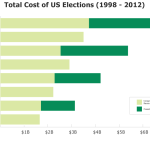
This is a brief note on elections - that bedrock of modern democracy. A key and indispensable pillar of modern democracy - heck modernity - is the notion of elections. Elections, many believe, are a fundamental way for people to express their voice, and some believe even for people to engage in self-determination as envisaged in the Charter of the United Nations. Without … [Read more...] about A Brief Note on Elections – that Bedrock of Modern Democracy…
Francis Fukuyama
Who Are You Calling a Police State and Other Urgent Matters

It's a long running joke that many in the West continue to misleadingly characterize China as a police state. In the run up to the Olympics, there are people who mocked Chinese efforts to provide for a safe and successful Olympics - even though massive security efforts now appear to be quite routine in the West (see e.g., 2002 Olympics, 2004 Olympics, 2006 Olympics, 2010 … [Read more...] about Who Are You Calling a Police State and Other Urgent Matters
Jim Hoge of Foreign Affairs Magazine on China
Jim Hoge has been the editor of Foreign Affairs magazine since 1992. He holds the Peter G. Peterson Chair at the Council on Foreign Relations, and is a director of Human Rights Watch and the Foundation for a Civil Society. He is also the chairman of the International Center for Journalists. He recently had this to say about China. … [Read more...] about Jim Hoge of Foreign Affairs Magazine on China
Peaceful rise, the biggest international relations issue of our life time
In 1996, Samuel P. Huntington published his famous book, "The Clash of Civilizations and the Remaking of World Order" where he posited after the Cold War, the world is more likely going to have major wars due to civilizational fault lines than anything else. He recognized that the Cold War was a competition between the Capitalist West and the Communist East. Huntington … [Read more...] about Peaceful rise, the biggest international relations issue of our life time